← All six guidesIntermediate · Reviewed August 2026Sound Treatment Without Wasted Material
Use constrained-layer damping, decoupling foam, and barrier material for the different problems they actually solve.
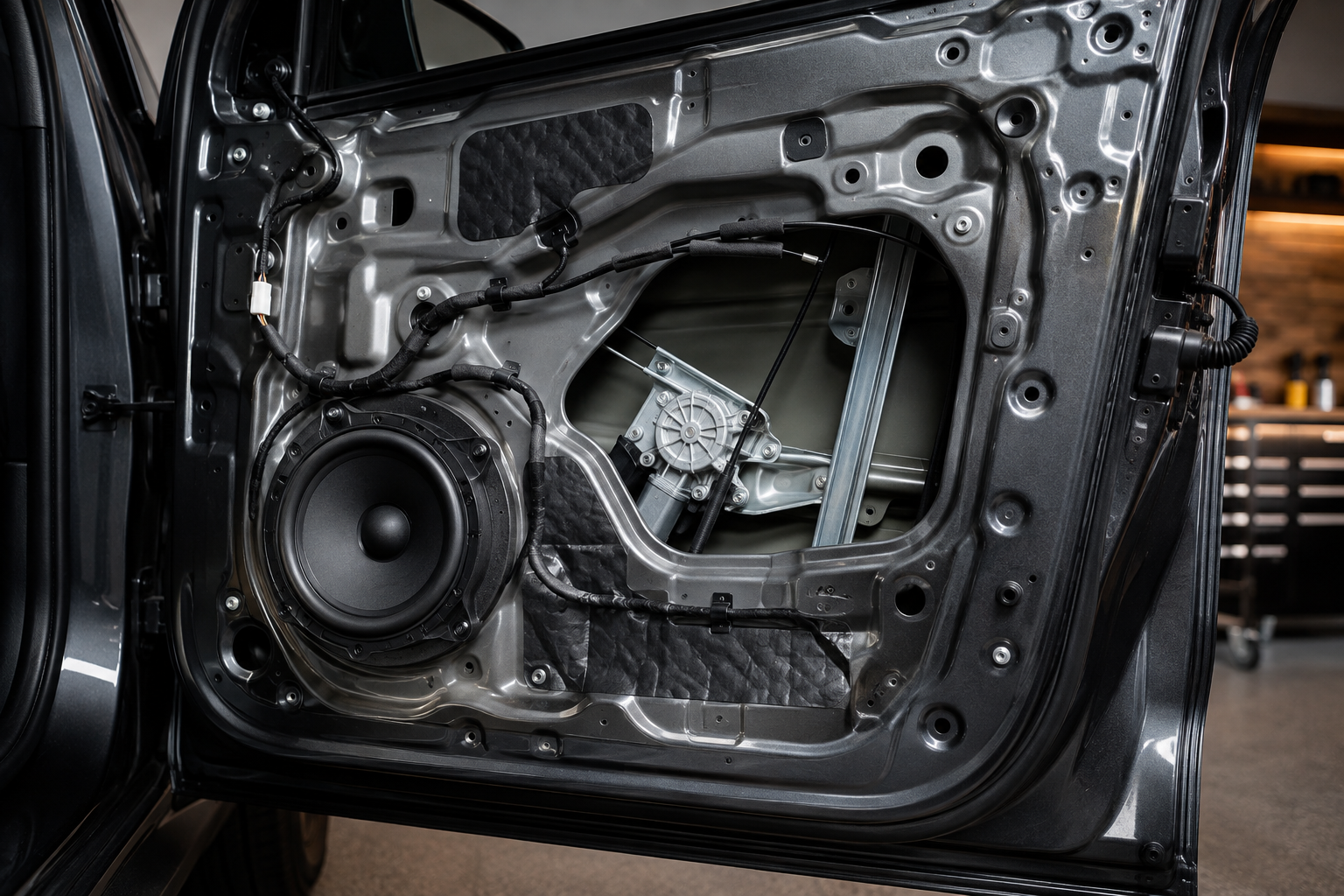
1. Match the material to the problem
- Constrained-layer damping reduces resonance in flexible metal panels; it is not primarily an airborne-noise barrier.
- Closed-cell foam is useful as a decoupler and anti-rattle layer; it is not a substitute for a heavy sound barrier.
- A limp mass barrier can reduce airborne noise when installed with broad, well-sealed coverage and safe clearances.
- Speaker-coupling foam helps direct front-wave energy through the door-card grille instead of letting it leak behind the panel.
2. Prepare and apply
- Clean, dry, and degrease the surface using a product compatible with the vehicle finish.
- Apply damping material to the broad, resonant areas and roll it firmly without trapping air.
- Treat rattling clips and contact points selectively rather than stuffing the entire door with foam.
- Preserve water drainage and restore the moisture barrier before reassembly.